
Market Movers
Sports Card InvestorSports
4.2135.00 Reviews
- Version
- 5.4.0
- Installs
- 100.00K
- Age Rating
- Everyone
Screenshots
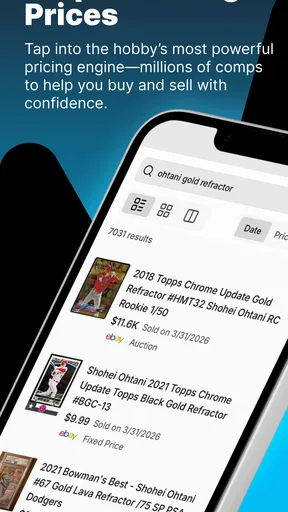
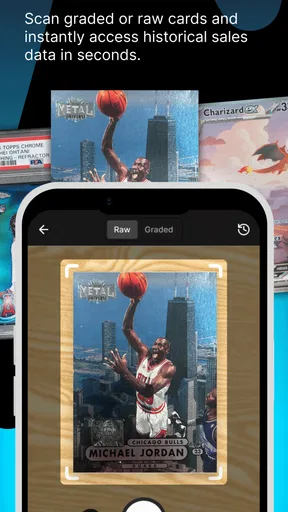
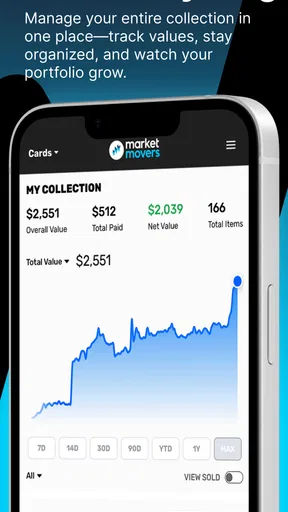
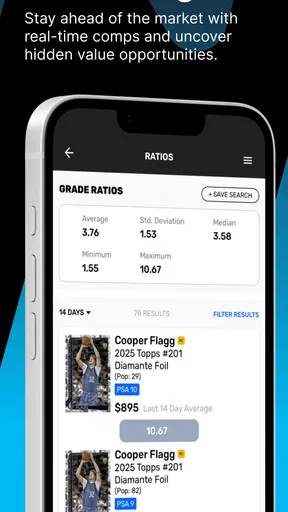
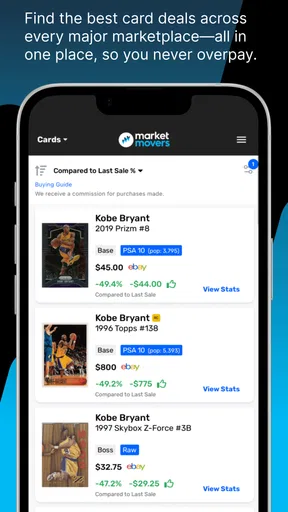
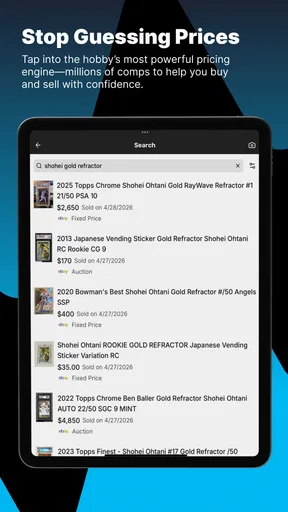
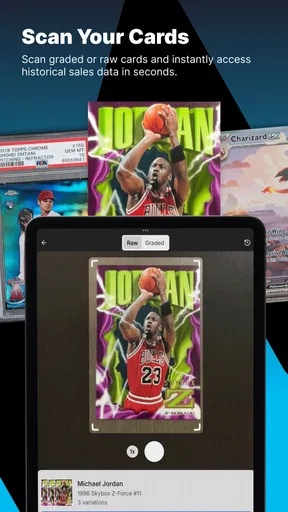
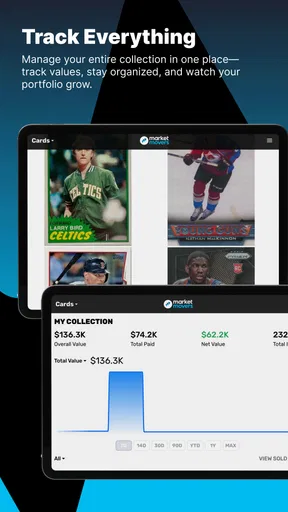
Our Review of Market Movers
 Analysis by Appyee
I approached Market Movers as a sports-card and trading-card companion rather than as a conventional sports game. Its purpose is to help enthusiasts make sense of a market that can feel scattered across listings, player news, collections, and changing card values. That makes it especially interesting for people who already buy, sell, or follow cards and want a more focused place to research before making decisions.
The app is developed by Sports Card Investor and sits in the Sports category. It is free to install, rated for Everyone, and has passed 100K installs. Its average rating is 4.2 from around 500 ratings, which suggests a generally positive reception while still leaving room for individual expectations to differ. I would describe it as a research and tracking tool first, not a replacement for a marketplace or a complete collection-management system.
How Market Movers fits into a card collector’s routine
The strongest reason to open this app is usually a question: is a card becoming more interesting, is it losing momentum, or is its current attention mostly noise? A useful card app should make that question easier to investigate without forcing me to jump between several unrelated sources. Market Movers is built around that kind of focused research, which gives it a clearer identity than a general sports-news app.
In everyday use, I can imagine checking it before buying a card, reviewing a player’s cards after a notable performance, or looking through a collection to decide which items deserve closer attention. It is also useful for a collector who wants to move beyond emotional buying. A favorite player may still be worth collecting, but market information can help separate personal enjoyment from a purchase made with resale expectations.
That distinction matters. Sports cards combine fandom, scarcity, condition, timing, and speculation. No app can remove those variables. What Market Movers can do is provide a more organized starting point for thinking about them. I would use it to form a shortlist and identify patterns, then verify the actual card, condition, seller, and transaction details elsewhere before spending money.
What the free access means in practical terms
The app itself is free, so trying it does not require an upfront payment. That is a meaningful advantage for newcomers who are still deciding whether card-market research belongs in their routine. You can explore the basic experience before committing to anything, rather than paying simply to discover that the workflow does not match the way you collect.
There are in-app purchases ranging from $9.99 to $499.99 per item. Those prices make the free-versus-paid distinction important. Free installation should not be confused with unlimited access to every part of the service, and a serious collector should examine what a particular purchase unlocks before treating it as a necessary expense. I would not recommend buying immediately just because the app looks useful at first opening.
The sensible approach is to begin with a specific task. For example, spend time researching a few players or cards you already understand, see whether the information is presented in a way that genuinely saves effort, and only then consider whether a paid option would improve your workflow. The value of a subscription or other purchase depends heavily on how often you research cards and whether the app replaces enough manual work to justify it.
For occasional collectors, free access may be enough to support periodic checking. Someone who buys and sells regularly may find paid access more relevant, but the decision should come from repeated use rather than from the presence of advanced-looking tools. The important value question is not whether Market Movers has paid features, but whether those features change your decisions often enough to earn their cost.
Where the app can save time
One of its practical strengths is concentration. Instead of treating every card as an isolated purchase, I can approach a player, set, or segment of my collection as part of a wider market picture. That changes the way I research. Rather than asking only whether one listing looks cheap, I can ask whether the card belongs to a group that deserves attention and whether my interest is based on evidence or enthusiasm.
A realistic scenario would be a collector preparing for a weekend purchase. Before opening marketplace listings, I would use Market Movers to review the players and card types on my shortlist. If one name keeps appearing in my research but the available cards vary widely in appeal, I would narrow the search by card quality, release, and personal collecting goal. Then I would compare the resulting shortlist with actual listings, because an app-based market view does not remove the need to inspect the individual item.
This workflow also helps with selling. A seller can use the app as a research checkpoint before choosing which cards to list first. The useful insight is not simply “this card is valuable.” It is deciding whether the card is worth photographing, grading, listing, or holding when time is limited. That is a more realistic use than expecting an app to predict a perfect selling moment.
Another worthwhile habit is keeping separate notes for cards I want because I enjoy them and cards I am watching for market reasons. Market Movers can support the research side of that process, but the discipline has to come from the user. Mixing those two motivations is one of the easiest ways to overspend while believing a purchase is purely analytical.
Tradeoffs that matter before relying on it
The first limitation is that market information can create a false sense of precision. A changing number or trend may look authoritative, but cards are physical objects with differences in condition, grading, centering, print quality, edition, and buyer demand. Two cards that appear similar in a broad search can behave very differently when listed for sale. I would never treat an app view as a substitute for examining the exact card.
The second tradeoff is attention. Tools designed for frequent checking can encourage users to monitor small changes too closely. That may be useful for an active seller, but it can make a casual collector feel pressure to react to every movement. My advice is to decide in advance what would actually change your action. If a minor shift would not affect whether you buy, sell, or hold, checking it repeatedly probably adds stress rather than insight.
The third issue concerns paid value. The free entry point is attractive, but the purchase range is wide enough that users should be careful about assuming every paid option is suitable for them. A high-cost purchase may make sense for a professional or highly active collector, while being excessive for someone who opens the app only around major games or personal buying decisions. The app’s cost should be judged against actual frequency of use, not against the total amount already spent on cards.
I also see a natural boundary between this app and a marketplace. Market Movers can help with research, but a marketplace is where a buyer normally evaluates a specific seller, listing, shipping arrangement, photographs, and transaction terms. If your main need is to complete a purchase quickly, a marketplace may be the better first stop. If your problem is deciding what deserves your attention before browsing listings, this app is more relevant.
Who is most likely to get real value
I think the best audience is the collector who already has a few concrete questions. Perhaps you are comparing cards from one player, deciding whether to sell part of a collection, or trying to make buying less impulsive. In those situations, a dedicated research tool can add structure without requiring you to become a full-time analyst.
It is also a good fit for someone moving from casual collecting toward more deliberate buying. You do not need to treat every card as an investment to benefit from market awareness. Even a collector who never sells can use research to avoid paying an unreasonable amount for a card or to understand why two visually similar items attract different levels of interest.
Active sellers may find the app more valuable because time matters when evaluating many cards. A repeatable routine—research the player, compare relevant cards, inspect the actual listing environment, and then decide whether to list—can be more useful than relying on memory. The app does not replace judgment, but it can give that judgment a consistent starting point.
On the other hand, I would tell a purely casual fan to approach it lightly. If you only want scores, news, schedules, or general sports updates, a standard sports app will probably serve you better. Market Movers is specialized, and that specialization is its appeal. It may feel unnecessary if you have no interest in cards, prices, collecting decisions, or market research.
I would also be cautious if you are looking for certainty. No card-tracking tool can promise that a purchase will rise in value, and a positive pattern does not eliminate downside. Users who are uncomfortable with fluctuating markets should use the app for education and organization rather than as a signal to spend beyond their budget.
Tips for using it without overpaying
My first tip is to start with cards you know personally. Familiar players and sets make it easier to notice whether the app is helping you understand decisions or merely presenting information that looks impressive. Once the workflow feels useful, expand to unfamiliar names instead of paying for access before you know how you will use it.
Second, separate research from action. I would browse the app during one session, write down the cards that genuinely interest me, and wait until I have checked the specific listings before buying. This small pause reduces the chance that a moment of excitement turns a market observation into an unnecessary purchase.
Third, compare like with like. A broad player search is a starting point, not a final valuation. Before acting, check whether the card’s release, condition, grading status, and version match the examples influencing your decision. This is one of the most important habits because a general market trend can be misleading when the underlying cards are not truly comparable.
Fourth, use a personal budget beside the app. Market research may improve selection, but it can also make more purchases feel justified. I would set a monthly or project-based limit before opening the research screen. That protects the collecting hobby from becoming an endless response to new opportunities.
Finally, review your results after a purchase or sale. Did the app help you avoid a weak listing, identify a better target, or simply confirm what you already knew? That reflection tells you whether paid access is delivering practical value. If it does not change your process, the free version or a different research method may be enough.
Performance expectations and long-term use
The current version is 5.4.0 and the app supports Android 7.0 or later, which gives it a broad compatibility range for Android users. That matters if you use an older phone as a dedicated collecting device or do not upgrade frequently. Still, compatibility alone does not guarantee that every device will feel equally comfortable, so I would judge the interface during real searches rather than from the version number.
The Everyone content rating also makes the app approachable for a broad audience. However, age suitability does not make financial decisions risk-free. A younger collector may be able to explore the app, but any purchases or market actions should still be handled with appropriate guidance and a clear spending limit.
Its long-term usefulness will depend on whether it becomes part of a repeatable habit. I would not open it simply because I feel I should be monitoring the market. I would open it when I have a defined task: preparing a purchase, reviewing a collection, researching a player, or deciding what to sell. That keeps the app useful instead of turning it into a source of constant distraction.
The developer’s focus on sports cards gives the product a more purposeful feel than a generic finance or sports-news tool could provide. At the same time, that focus means the app is not trying to serve every kind of collector equally. People whose interests sit mainly in non-sports trading cards should first confirm that the available research experience matches the cards they actually follow, rather than assuming the sports-card emphasis will translate perfectly to every collection.
My verdict on the free and paid sides
I see Market Movers as a worthwhile free starting point for sports-card enthusiasts who want more structure before browsing listings or making collection decisions. The free installation lowers the risk of trying it, and the specialized focus is more useful than a general sports app when your question concerns cards rather than games alone.
Paid access is a separate decision. The available purchases extend from $9.99 to $499.99 per item, so I would not describe every option as automatically good value for every user. Frequent sellers and dedicated researchers may be able to justify paying if the app becomes central to their routine. Casual collectors should test the free experience, identify a specific benefit, and avoid upgrading merely because advanced access sounds appealing.
My final recommendation is to install it if you collect sports cards, regularly compare potential purchases, or want a more disciplined way to think about selling. Use it as a research assistant, not as a prediction machine. If your priority is live sports coverage, direct buying, or a simple inventory list, another category of app will likely fit better.
For me, the deciding strength is its ability to turn a vague “should I buy this?” moment into a more organized investigation. Its deciding weakness is the temptation to treat organized information as certainty. Used with a budget, careful card-to-card comparisons, and verification of the actual listing, Market Movers can earn a place in a serious collector’s routine. Used as an automatic reason to spend, it is much less convincing.
Verdict
Strengths of Market Movers
- Real-time market data helps track stocks and crypto movements quickly.
- Custom watchlists make it easy to monitor selected assets in one place.
- Clear charts support quick analysis of price trends and performance.
- Useful alerts can notify you about important market changes.
- Suitable for beginners who want a simple overview of market activity.
Limitations of Market Movers
- Some advanced tools may require a paid subscription.
- Market data can be delayed depending on the asset or plan.
- Frequent notifications may feel excessive without careful customization.
- The amount of market information can overwhelm first-time investors.
- It does not replace professional advice or guarantee profitable decisions.
Similar Picks in This Category
View All
BeSoccer: Soccer Live Score
BeSoccer apps4.3

Cricbuzz - Live Cricket Scores
Cricbuzz.com3.7

NFL
NFL Enterprises LLC2.4

Da Fit
MO YOUNG LIMITED3.6

ESPN
Disney4.5

LiveScore: Live Sports Scores
LiveScore Limited4.5
Frequently Asked Questions
What is Market Movers, and who is it designed for?
Market Movers is a market-analysis and trading research app designed for people who want a more structured way to follow financial markets. It can be useful for beginners learning how market data is interpreted as well as experienced traders looking for watchlists, research tools, alerts, and organized information. However, it should be treated as a research aid rather than a replacement for personal analysis or professional financial advice.
What features can I expect to find in Market Movers?
The app focuses on helping users monitor market activity and evaluate potential opportunities from a single mobile interface. Depending on the subscription and platform version, users may find market data, watchlists, charts, screening tools, news or research content, alerts, and portfolio-related features. The exact tools available can change over time, so it is worth checking the current app description and pricing before downloading or upgrading.
Is Market Movers free to download and use?
Market Movers may be available to download without an upfront charge, but some of its more advanced research tools, data services, alerts, or educational content can require a paid subscription or in-app purchase. Before creating an account, review the available plans, billing period, trial conditions, and cancellation policy. Also remember that market data may be delayed or restricted depending on the selected plan and region.
Can Market Movers be used to buy and sell stocks or other investments?
Market Movers is primarily intended for market research, monitoring, and analysis, rather than acting as a complete brokerage platform. Whether you can place trades directly depends on the app’s current integrations and the services available in your country. In many cases, users must transfer information to a separate broker before executing a transaction. Always verify the supported instruments and trading functionality before relying on the app.
Is Market Movers suitable for beginners, and is the information reliable?
Beginners can benefit from Market Movers because its organized market information may make it easier to create watchlists and understand basic trends. Nevertheless, financial terminology, charts, and indicators can be confusing at first, and no tool can guarantee profitable results. Users should confirm important information with trusted sources, understand that prices can change quickly, and avoid investing money they cannot afford to lose.
